Secure Access Required
From the tribal heartlands of Madhya Pradesh to the technology corridors of Karnataka — a leadership journey that bridges India's regional diversity with national governance imperatives.
Thawar Chand Gehlot's political identity is inseparably linked to Madhya Pradesh — India's second-largest state by area, and a state whose social and political landscape profoundly shaped his worldview. Born in Dhar district, in the Malwa region of western Madhya Pradesh, his formative experiences in this predominantly agrarian, tribal-influenced landscape instilled a political sensibility that is grounded in the realities of rural India.
Madhya Pradesh in the mid-twentieth century was a state grappling with the challenges of post-independence nation-building. Land reform, caste-based social hierarchies, inadequate educational infrastructure, and limited economic opportunities defined the lives of most citizens, particularly those from Scheduled Caste and Scheduled Tribe communities. For the young Gehlot, these were not abstract policy challenges — they were the conditions of his daily existence.
His political apprenticeship in Madhya Pradesh — through the Jan Sangh and later the BJP — taught him the fundamentals of democratic mobilisation: how to organise communities, articulate grievances, build coalitions, and translate grassroots concerns into political demands. These skills, honed in the competitive political environment of a large Indian state, proved invaluable when he transitioned to the national stage.
Madhya Pradesh's unique demographics — with significant SC and ST populations — also shaped Gehlot's political focus. The state's experience with reservation policy, tribal welfare, and social integration provided him with a laboratory for understanding the practical dimensions of social justice policy. His Rajya Sabha nominations from Madhya Pradesh over five consecutive terms reflected both his continuing connection to the state and the state BJP's recognition of his national stature.
The BJP's rise in Madhya Pradesh from a marginal political force in the 1970s to the dominant party by the late 1990s is one of the most significant political transformations in Indian state politics. Gehlot was both a participant in and a beneficiary of this transformation. His role in building the party's social base among Scheduled Castes and backward communities was instrumental in broadening the BJP beyond its traditional upper-caste, urban constituency in the state.
His work in Madhya Pradesh demonstrated a political skill that would later define his national career: the ability to reconcile social justice advocacy with broader party ideology. While the BJP's ideological framework emphasised cultural nationalism and integral humanism, Gehlot consistently ensured that social justice — particularly for Dalit and backward communities — received substantive attention within the party's policy platform.
This bridge-building role was particularly important during periods when the party's relationship with Dalit communities was contested by political opponents. Gehlot's personal credibility — as a Scheduled Caste leader who had risen through the party ranks based on competence and commitment — served as a powerful counter-narrative, demonstrating that the BJP could nurture and elevate leaders from marginalised backgrounds.
Karnataka is one of India's most dynamic and complex states. With Bengaluru serving as India's technology capital and a global IT hub, the state combines cutting-edge modernity with deep agrarian traditions. Its population of over 67 million spans diverse linguistic, cultural, and economic zones — from the cosmopolitan tech corridors of Bengaluru to the semi-arid landscapes of North Karnataka, from the coastal trading communities of the Konkan to the mining regions of Bellary.
For Gehlot, the transition from Madhya Pradesh — a predominantly Hindi-speaking, landlocked state with a largely agrarian economy — to Karnataka required a significant recalibration of political and governance understanding. Yet his appointment also brought distinctive advantages: as a leader from outside the state's political establishment, he could bring an outsider's objectivity to a state politics marked by intense factional competition; and his experience as a social justice administrator provided a lens through which to engage with Karnataka's own challenges of caste, class, and regional inequality.
The fact that Gehlot was the first Governor of Karnataka from Madhya Pradesh added symbolic significance to his appointment, representing the kind of cross-regional integration that India's federal architecture is designed to promote. His presence in the Raj Bhavan brought Madhya Pradesh's grassroots political culture into dialogue with Karnataka's cosmopolitan governance tradition — a fusion that has enriched the state's institutional landscape.
As Governor, Gehlot oversees a state that is home to Bengaluru — India's Silicon Valley — and a major contributor to India's IT exports. His engagement with the technology sector has included participation in innovation summits, interaction with startup founders, and advocacy for digital literacy in rural Karnataka. His ministerial experience with digital governance tools (the National Scholarship Portal, DBT systems) gives him a practical understanding of technology's transformative potential.
Despite Bengaluru's prominence, Karnataka remains a significantly agrarian state, with major crops including coffee, silk, and sugarcane. The state's farmers face challenges including water scarcity, market price volatility, and climate change impacts. As Governor, Gehlot has emphasised the importance of agricultural support and rural development in his addresses to the state legislature, drawing on his understanding of rural India from his Madhya Pradesh roots.
Karnataka hosts some of India's premier educational institutions, and the Governor's role as Chancellor of 60+ state universities gives Gehlot significant influence over higher education governance. He has used this platform to advocate for inclusive admissions, academic excellence, and institutional accountability — themes directly connected to his lifelong social justice advocacy.
The state's infrastructure ambitions — including Bengaluru's metro expansion, highway projects connecting the state's regions, and port development along the coast — require coordinated governance. As Governor, Gehlot's role is largely ceremonial in these matters, but his public advocacy for development and his facilitation of centre-state communication on infrastructure projects have contributed to the state's development trajectory.
Gehlot's national influence extends far beyond the formal offices he has held. As one of the most senior Dalit leaders in the BJP — and indeed in Indian politics more broadly — his political journey has shaped how social justice is understood and operationalised within India's governance framework.
His presence in the BJP's highest decision-making bodies — the Parliamentary Board and Central Election Committee — ensured that Dalit and backward class perspectives were part of the party's strategic calculus during a critical period of its national expansion. His influence was particularly significant in shaping the party's welfare platform for the 2014 and 2019 general elections, both of which saw the BJP make significant inroads among communities traditionally aligned with other parties.
At the national policy level, his work on disability rights has had lasting impact. The RPwD Act of 2016 has fundamentally changed India's approach to disability — from a charity-based model to a rights-based framework. The institutional structures he built — the strengthened Chief Commissioner's office, the National Fund for Persons with Disabilities, the Accessible India Campaign — continue to operate and evolve, providing a foundation for ongoing policy development.
His tenure as Leader of the House in Rajya Sabha during one of India's most consequential legislative periods has left an indelible mark on parliamentary history. The legislation he steered through the Upper House — from Article 370 to the CAA — represented some of the most transformative legal changes in post-independence India. Whether one agrees with the substance of these laws or not, the parliamentary skill required to manage their passage through a House where the government lacked a majority is universally acknowledged.

A leader whose influence spans regions and institutions
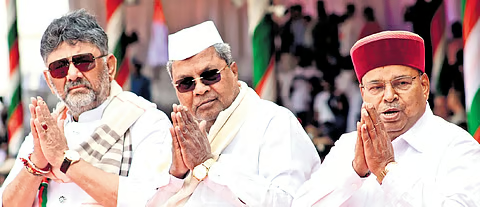
Connecting governance philosophy with public discourse
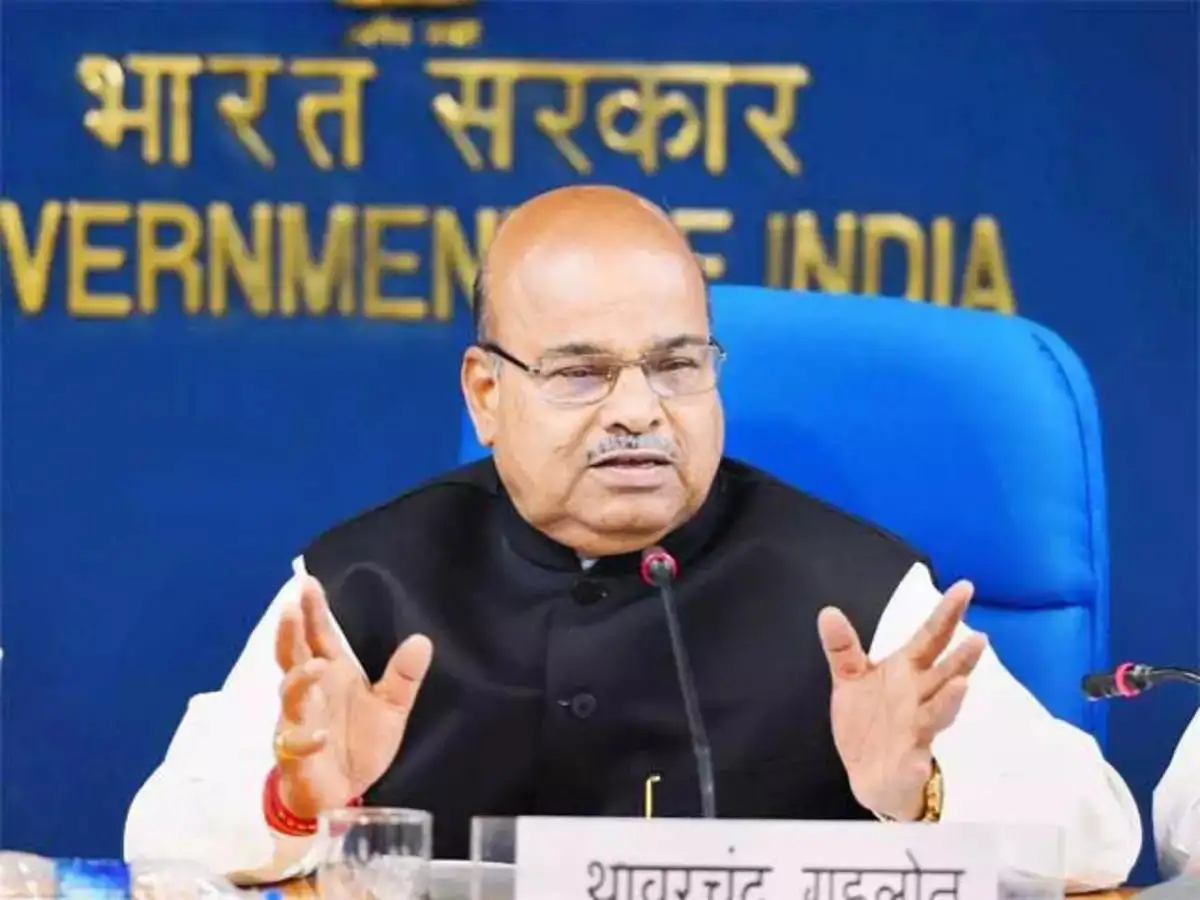
Decades of service across India's governance architecture