Secure Access Required
Thawar Chand Gehlot embodies a rare confluence of grassroots social consciousness and institutional authority. From the rural heartlands of Madhya Pradesh to the Raj Bhavan in Bengaluru, his journey charts the arc of inclusive governance, parliamentary mastery, and unwavering commitment to social justice — serving as a constitutional guardian of one of India's most dynamic states.
Thawar Chand Gehlot's political life is an embodiment of the constitutional promise of equality and social justice. Born into the very communities that India's affirmative action policies seek to empower, his journey is a living testament to the transformative power of inclusive democracy.
Gehlot's understanding of social justice is deeply rooted in the Indian Constitution's Directive Principles. His work across decades has been guided by the belief that governance is not merely administrative — it is an ongoing project of social transformation. He has consistently advocated for the rights of Scheduled Castes, Scheduled Tribes, Other Backward Classes, and Persons with Disabilities, seeking not just representation but substantive empowerment. His tenure as Union Minister saw the elevation of welfare policy from a bureaucratic exercise to a strategic pillar of national development.
For Gehlot, inclusion is not a slogan — it is an institutional framework. As Leader of the House in Rajya Sabha, he ensured that marginalised voices found legislative expression. As Union Minister, he transformed the Ministry of Social Justice & Empowerment into a dynamic engine for policy innovation, launching schemes that reached millions. His governance model integrates policy design, field implementation, and grassroots feedback, creating a cycle of continuous improvement. This philosophy now informs his constitutional role as Governor, where he serves as a bridge between the aspirations of the people and the machinery of the state.
From parliamentary strategy to welfare policy, from party organisation to constitutional stewardship — Thawar Chand Gehlot's leadership spans the full spectrum of democratic governance.
As the 19th Governor of Karnataka, Gehlot serves as the constitutional head of one of India's largest and most complex states. His role encompasses legislative assent, university chancellorship, and state-centre coordination — executed with the measured judgement of a seasoned parliamentarian.
Five terms in the Rajya Sabha, culminating in the role of Leader of the House — Gehlot mastered the art of legislative strategy. He steered landmark legislation, managed parliamentary proceedings during contentious sessions, and served as the government's principal voice in the Upper House.
As Union Minister for Social Justice & Empowerment (2014–2021), he oversaw the most comprehensive expansion of social welfare infrastructure in a generation. From disability rights to scholarship programmes, his ministry touched millions of lives across India.
A member of the BJP Parliamentary Board and Central Election Committee — the party's apex decision-making bodies — Gehlot has shaped electoral strategy across multiple cycles. His organisational acumen has been crucial in BJP's expansion into southern and eastern India.
Gehlot's political career began in the villages of Madhya Pradesh. This grassroots foundation ensures that his policy perspective is always grounded in the realities of rural India — an understanding that national-level politicians often lack.
Throughout his career, Gehlot has served as a bridge between communities and state institutions. Whether advocating for Dalit empowerment, disability rights, or tribal welfare, he has consistently worked to ensure that the state's promises translate into lived realities.
From a young activist in Madhya Pradesh to the Raj Bhavan in Bengaluru — five decades of continuous service to the nation.
Born on 18 May 1948 in Rupeta village, Dhar district, Madhya Pradesh, into a Scheduled Caste family. This humble origin shaped his lifelong commitment to social justice and inclusive governance.
Began his political journey through grassroots activism and the Jan Sangh, later transitioning to the Bharatiya Janata Party. His early work focused on community organisation and social mobilisation in rural Madhya Pradesh.
Elected to the Rajya Sabha from Madhya Pradesh, marking his entry into national politics. He quickly established himself as a serious legislator with deep knowledge of social welfare policy.
Appointed Union Minister for Social Justice & Empowerment in Prime Minister Narendra Modi's first government. He became one of the most senior Dalit leaders in BJP's national leadership.
Appointed Leader of the House in Rajya Sabha, making him the government's chief spokesperson in the Upper House and responsible for managing all legislative business.
Appointed as the 19th Governor of Karnataka — the first from Madhya Pradesh to hold this position. He brought to the Raj Bhavan decades of legislative experience and a deep commitment to constitutional governance.
Concrete outcomes that have shaped national policy and transformed the lives of millions across India.
Under his stewardship as Minister, the landmark Rights of Persons with Disabilities Act was enacted in 2016, replacing the outdated 1995 legislation. This act expanded recognized disabilities from 7 to 21 categories, increased reservation in government jobs from 3% to 4%, and established the National and State Funds for Persons with Disabilities. The act aligned India's disability rights framework with the UN Convention on the Rights of Persons with Disabilities.
Gehlot oversaw a massive expansion of pre-matric and post-matric scholarship schemes for SC, ST, and OBC students. Under his tenure, funding increased significantly, reaching millions of students across India. The digitisation of scholarship disbursement through the National Scholarship Portal ensured transparency and reduced leakage, marking a transformative shift in how welfare benefits reached their intended beneficiaries.
Strengthened implementation of the Prohibition of Employment as Manual Scavengers Act under his ministry. He pushed for comprehensive surveys of manual scavengers, expanded rehabilitation assistance, and worked to provide dignified alternative employment. His approach combined legislative enforcement with welfare programmes to address one of India's most persistent social challenges.
As Leader of the House in Rajya Sabha, Gehlot successfully steered numerous pieces of landmark legislation through the Upper House, including the abrogation of Article 370 provisions relating to Jammu & Kashmir, the Citizenship Amendment Act, and the triple talaq bill. His ability to build consensus in a House where the ruling party lacked a majority demonstrated exceptional legislative management skills.
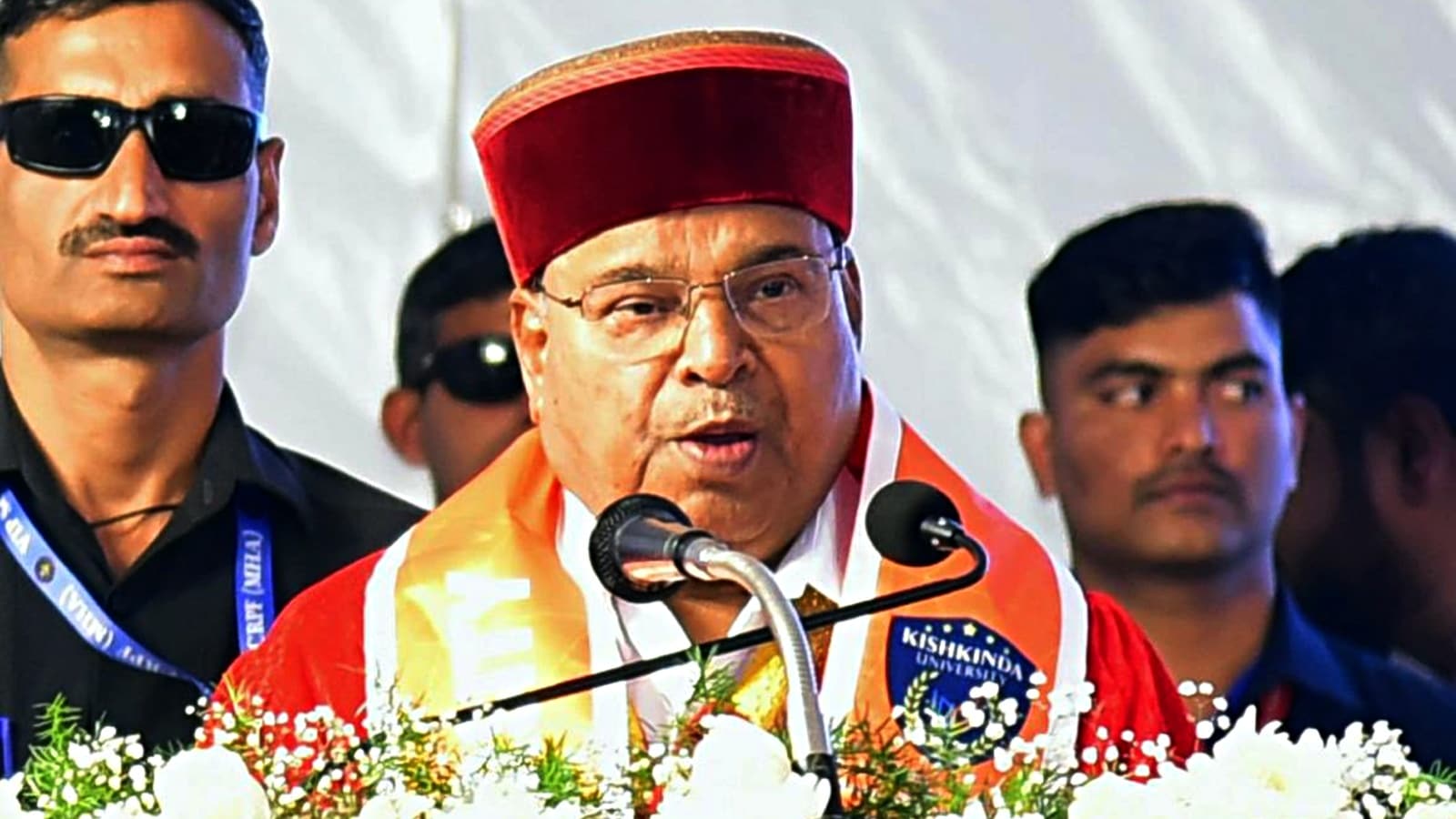
Discharging gubernatorial responsibilities as Governor of Karnataka
Inaugurating the National Trust conference on intellectual & developmental disabilities
Felicitating Rio Paralympic medalists and blind cricket team
Dive deeper into the life, policies, and governance philosophy of one of India's most significant social justice leaders.